The only pest on this list with a genuine safety dimension. Nest removal is included in the contract.
Nest shape tells you more than the insect does. An enclosed grey football hanging in the open is bald-faced hornet. A small open honeycomb under an eave is paper wasp. Steady traffic in and out of a hole in the ground or a gap in siding is yellowjacket, and that is the one to treat carefully. Honey bees are protected and beneficial — a dense cluster of golden-brown bees is a swarm and should go to a beekeeper, not a pest company.
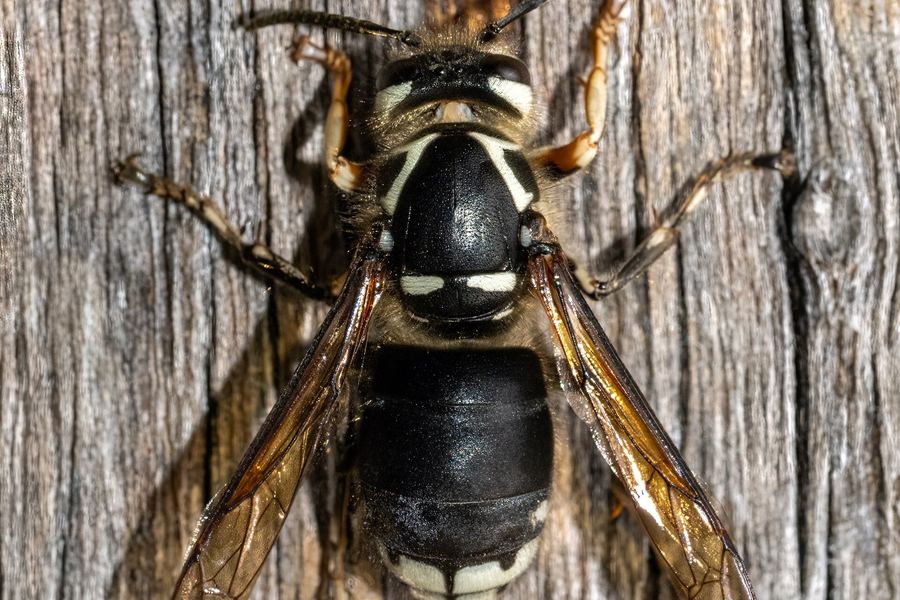
Black and white, builds the large grey paper nest hanging from a branch or eave. Highly defensive within about 10 feet of the nest.
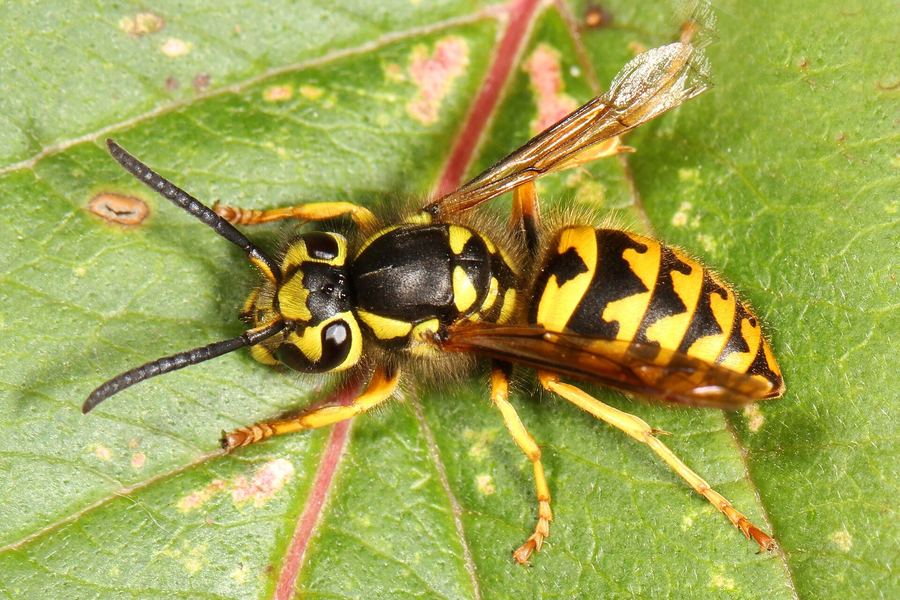
Yellow and black, often nests in the ground or inside wall voids. The aggressive one at your picnic in August. Ground nests are easy to strike accidentally with a mower.
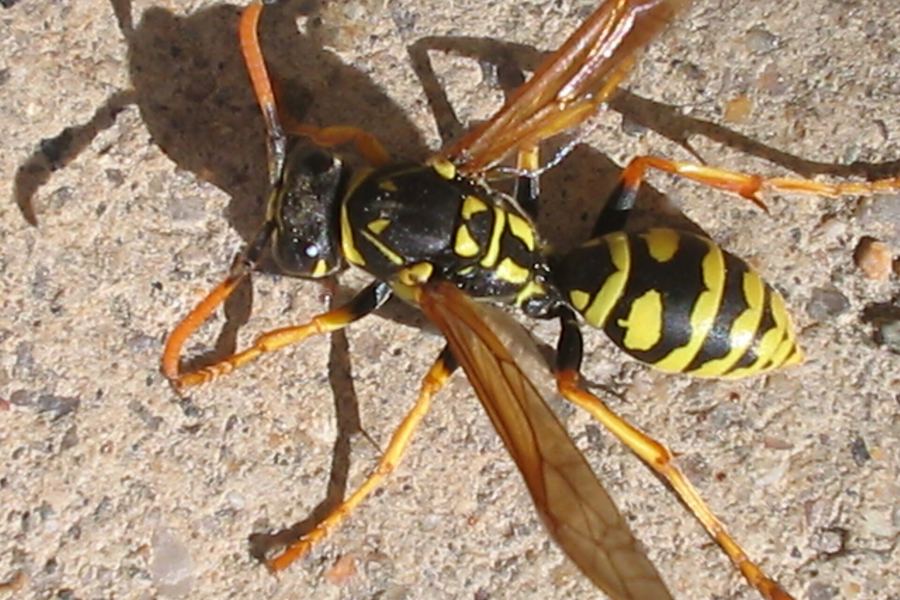
Slimmer, long dangling legs in flight, builds the small open umbrella-shaped comb under eaves and rails. Comparatively docile.
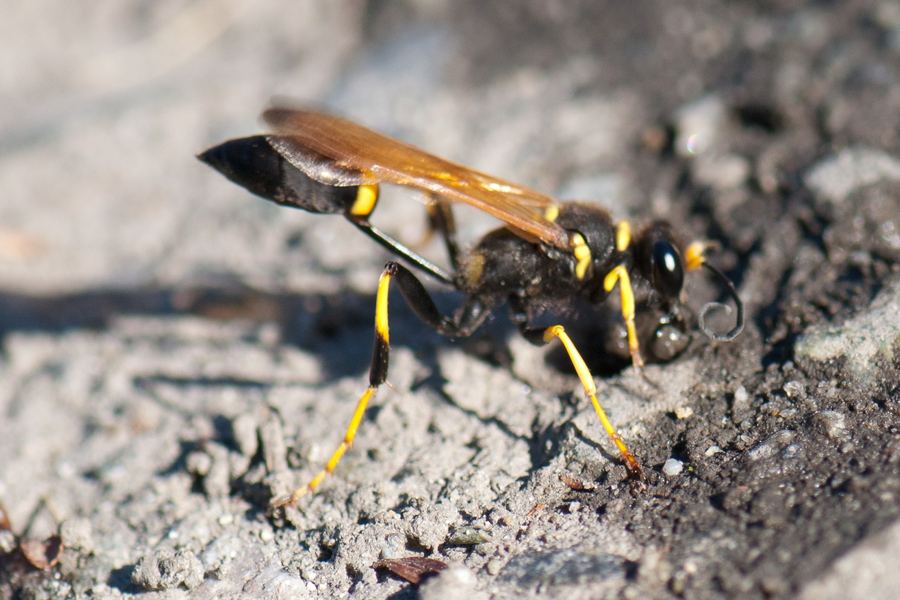
Builds small mud tubes on walls. Solitary and essentially harmless — usually best left alone.
South-facing walls and slopes take the most nesting activity because they stay warm through the afternoon — Bell Hill and Sunland in Sequim are textbook. Barns, pole buildings, and high eaves in Chimacum and Carlsborg give protected nesting with little disturbance. Ground-nesting yellowjackets are the real risk on pasture-adjacent property, where a mower or a footstep can open a nest without warning.
Nest removal is included in the contract, and scheduled visits catch nests while they are still small — which is the whole point. A nest treated in June is a two-minute job; the same nest in September holds thousands of insects and is genuinely hazardous. That is also why we do not recommend homeowners handle wall-void or ground nests themselves.
Call us when: A nest is inside a wall void, in the ground where people walk, larger than a fist, or anywhere near someone with a sting allergy. Do not attempt those.
Nest shape tells you more than the insect does. An enclosed grey football hanging in the open is bald-faced hornet. A small open honeycomb under an eave is paper wasp. Steady traffic in and out of a hole in the ground or a gap in siding is yellowjacket, and that is the one to treat carefully. Honey bees are protected and beneficial — a dense cluster of golden-brown bees is a swarm and should go to a beekeeper, not a pest company.
Nests build from May, peak late July through September. South-facing walls and slopes take the most nesting activity because they stay warm through the afternoon — Bell Hill and Sunland in Sequim are textbook. Barns, pole buildings, and high eaves in Chimacum and Carlsborg give protected nesting with little disturbance. Ground-nesting yellowjackets are the real risk on pasture-adjacent property, where a mower or a footstep can open a nest without warning.
Nest removal is included in the contract, and scheduled visits catch nests while they are still small — which is the whole point. A nest treated in June is a two-minute job; the same nest in September holds thousands of insects and is genuinely hazardous. That is also why we do not recommend homeowners handle wall-void or ground nests themselves.
Protected overhangs, eaves, deck rails, and open outbuildings. Uncovered rubbish, compost, fallen fruit, and outdoor pet food. Sugary drinks and meat outdoors in late summer. Existing gaps into wall voids and soffits. Abandoned rodent burrows, which yellowjackets readily colonise.
A nest is inside a wall void, in the ground where people walk, larger than a fist, or anywhere near someone with a sting allergy. Do not attempt those.
Flat contract pricing, and we answer the phone locally. Tell us about the property and we'll get you a number.
Or call (360) 670-3367 — we answer locally.

.jpg)


.jpg)