A humidity problem wearing an insect costume. Where you find them tells you where your moisture problem is.
The wriggling motion is the giveaway — nothing else indoors moves like it. They are wingless, about half an inch, and flee light instantly. They do not bite or carry disease, but they feed on starches and will damage paper, book bindings, wallpaper paste, and natural fabrics.
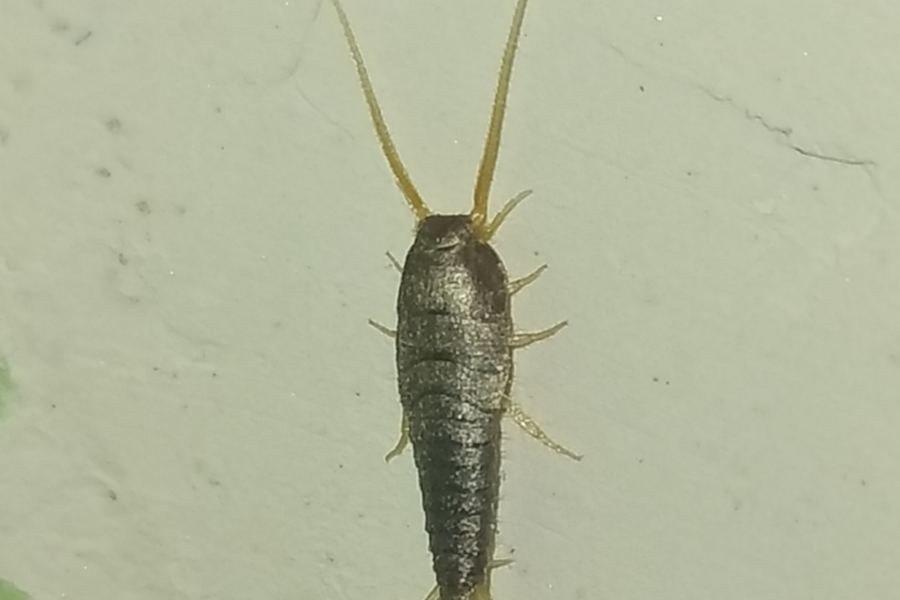
Teardrop-shaped, metallic silver-grey, three tail filaments, moves in a fish-like wriggle. Nocturnal and fast.
Silverfish are a reliable indicator of relative humidity above roughly 75%, which makes them common in older Port Townsend and Port Angeles homes with unsealed crawlspaces, and in bathrooms and laundry rooms peninsula-wide. Hood Canal properties in Brinnon and Quilcene have them year-round. In dry Sequim they are usually confined to a specific damp room rather than being a whole-house issue — and that room is the actual problem to solve.
Honestly: perimeter spraying is not the primary fix for silverfish, and we would rather tell you than take the money. They live and breed indoors, so an exterior barrier does relatively little. The real solution is dehumidification, crawlspace vapour barrier, and ventilation. Treatment can support that, but if someone sells you a spray contract as the answer to silverfish without mentioning humidity, they are selling you the wrong thing.
Call us when: Numbers stay high after humidity is genuinely under control, or you are finding damage to books, documents, or fabrics.
The wriggling motion is the giveaway — nothing else indoors moves like it. They are wingless, about half an inch, and flee light instantly. They do not bite or carry disease, but they feed on starches and will damage paper, book bindings, wallpaper paste, and natural fabrics.
Year-round indoors, worse in damp winter months. Silverfish are a reliable indicator of relative humidity above roughly 75%, which makes them common in older Port Townsend and Port Angeles homes with unsealed crawlspaces, and in bathrooms and laundry rooms peninsula-wide. Hood Canal properties in Brinnon and Quilcene have them year-round. In dry Sequim they are usually confined to a specific damp room rather than being a whole-house issue — and that room is the actual problem to solve.
Honestly: perimeter spraying is not the primary fix for silverfish, and we would rather tell you than take the money. They live and breed indoors, so an exterior barrier does relatively little. The real solution is dehumidification, crawlspace vapour barrier, and ventilation. Treatment can support that, but if someone sells you a spray contract as the answer to silverfish without mentioning humidity, they are selling you the wrong thing.
Relative humidity above about 75%. Cardboard storage, stacked paper, and old books. Unsealed crawlspaces and unventilated bathrooms. Wallpaper paste and starched natural fabrics. Leaking plumbing behind walls and under sinks.
Numbers stay high after humidity is genuinely under control, or you are finding damage to books, documents, or fabrics.
Flat contract pricing, and we answer the phone locally. Tell us about the property and we'll get you a number.
Or call (360) 670-3367 — we answer locally.