A pure nuisance pest with one specific habit: they mass on warm walls in autumn, then move inside to overwinter.
Flat, elongated, black with red-orange edging along the wings and thorax. They cluster in numbers on sunlit siding — usually a south or west wall — and do not bite, sting, breed indoors, or damage the structure. They can stain fabric and surfaces if crushed, which is the main practical complaint.
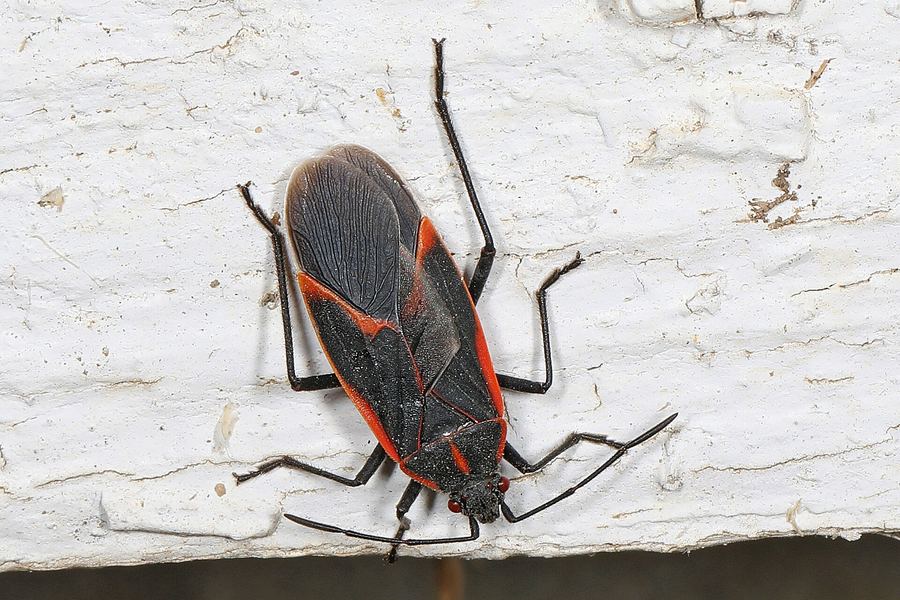
Black with distinct red-orange lines, about half an inch. Adults are unmistakable; nymphs are bright red and much smaller.
They depend on boxelder, maple, and ash trees, so pressure is entirely a function of what is growing nearby. A Sequim or Port Townsend property with mature maples takes heavy autumn congregation while a neighbour two streets over sees almost none. South-facing walls that hold afternoon heat are where they gather, which is why the same handful of properties report them year after year.
Timing is everything with this one. A perimeter application on sun-exposed walls in early autumn, before they move in, is highly effective. Once they are already inside wall voids, spraying accomplishes very little — at that stage a vacuum is genuinely the better tool, and there is no honest way to sell a treatment that works better than a vacuum cleaner.
Call us when: Autumn congregations are large enough to be a nuisance — and call in late summer, before they arrive, because that is when treatment actually works.
Flat, elongated, black with red-orange edging along the wings and thorax. They cluster in numbers on sunlit siding — usually a south or west wall — and do not bite, sting, breed indoors, or damage the structure. They can stain fabric and surfaces if crushed, which is the main practical complaint.
Congregate September–November, reappear on warm days through spring. They depend on boxelder, maple, and ash trees, so pressure is entirely a function of what is growing nearby. A Sequim or Port Townsend property with mature maples takes heavy autumn congregation while a neighbour two streets over sees almost none. South-facing walls that hold afternoon heat are where they gather, which is why the same handful of properties report them year after year.
Timing is everything with this one. A perimeter application on sun-exposed walls in early autumn, before they move in, is highly effective. Once they are already inside wall voids, spraying accomplishes very little — at that stage a vacuum is genuinely the better tool, and there is no honest way to sell a treatment that works better than a vacuum cleaner.
Boxelder, maple, or ash trees on or near the property. Large sun-warmed south and west walls. Gaps around windows, siding seams, and soffit vents. Light-coloured walls, which hold and show warmth.
Autumn congregations are large enough to be a nuisance — and call in late summer, before they arrive, because that is when treatment actually works.
Flat contract pricing, and we answer the phone locally. Tell us about the property and we'll get you a number.
Or call (360) 670-3367 — we answer locally.

.jpg)