The number-one call on the peninsula. Which species matters enormously — one damages your house, the rest are a nuisance.
Count the body segments between thorax and abdomen, and look at the antennae. Ants have elbowed antennae and a narrow waist; termites (rare here) have straight antennae and no waist. Size is the fastest sort: anything approaching half an inch and black is likely a carpenter ant and deserves attention. Anything tiny, dark, and trailing along a counter edge is almost certainly an odorous house ant.
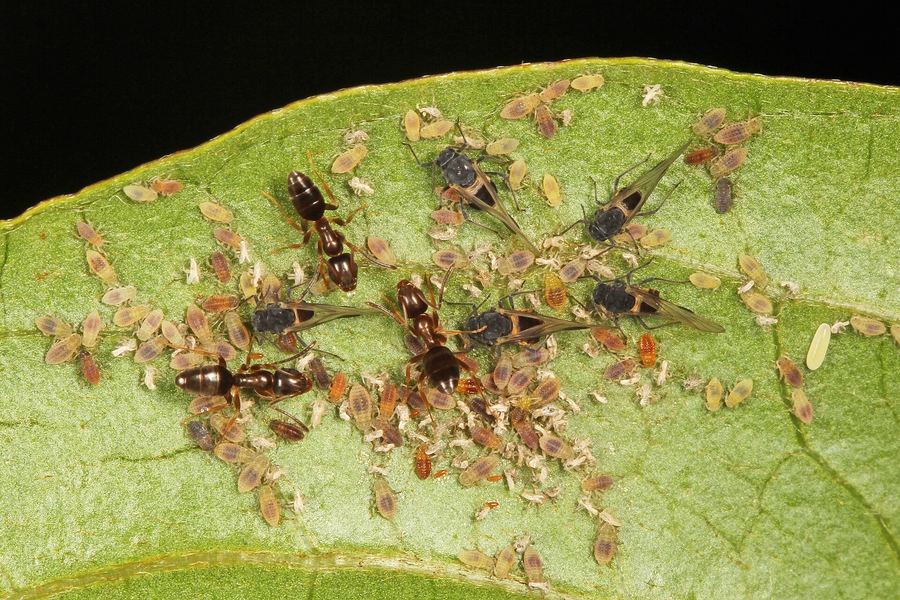
Small, dark, and smells faintly of coconut when crushed. The most common indoor ant in Sequim and the Dungeness Valley. Nuisance only — no structural damage.
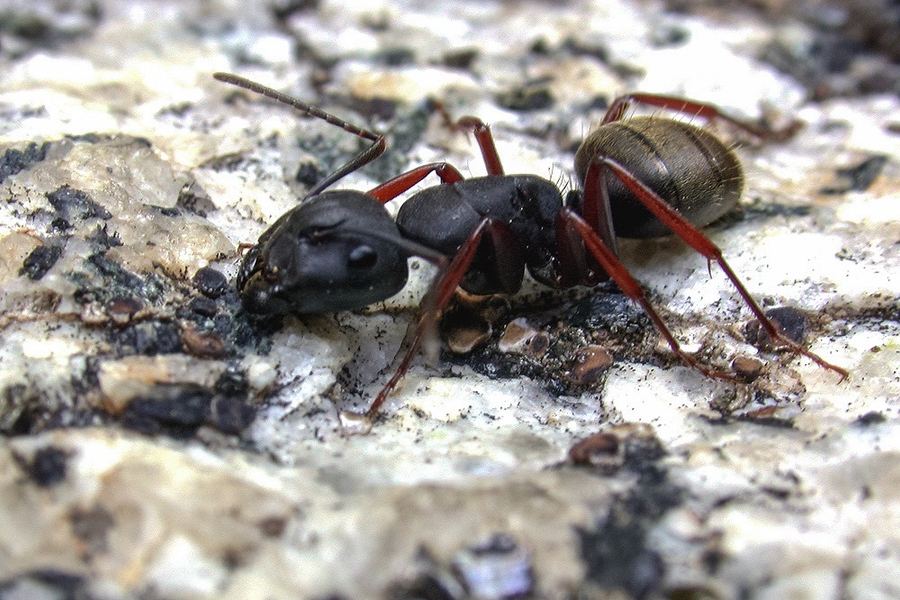
Large (up to half an inch), black or black-and-red. Excavates galleries in damp wood. This one damages structures and is the species that actually matters.
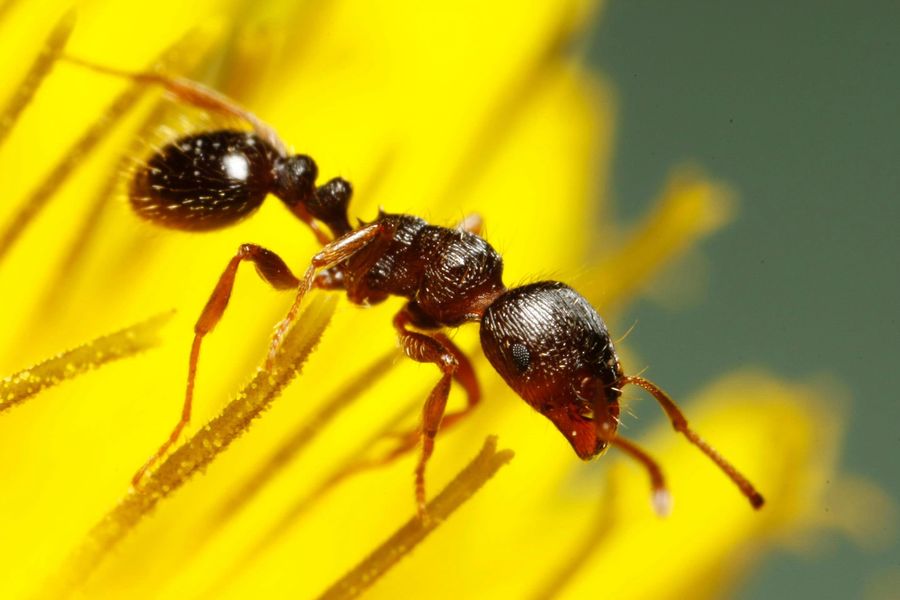
Small, brown-black, nests under slabs, driveways, and walkways. Throws up small soil piles at pavement seams.
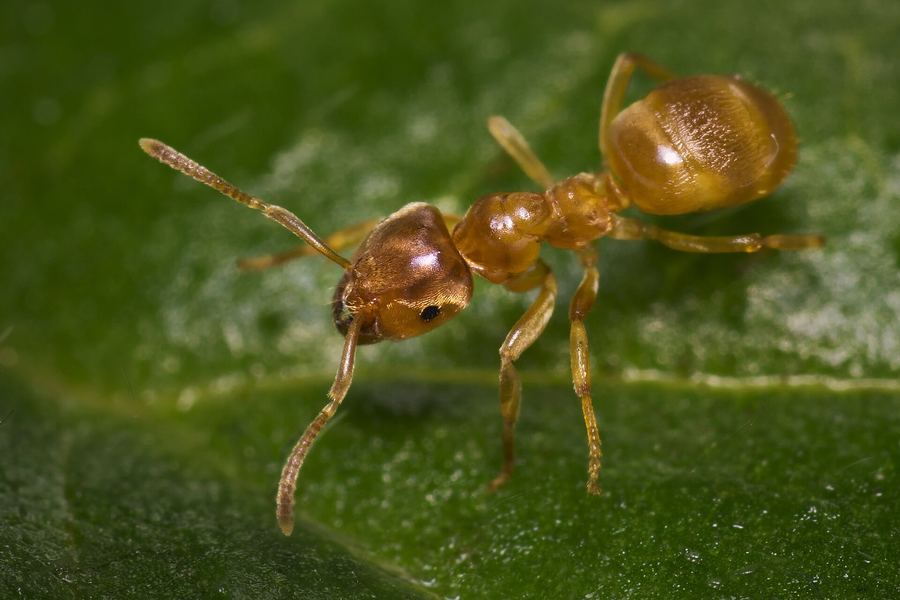
Yellowish, associated with chronically wet wood. Its presence is a symptom — it means you have a moisture problem to find.
The Sequim rain shadow produces a specific pattern: dry ground drives ants toward the only reliable water on the property, which is usually the building. Kitchens, dishwashers, and bathroom walls take the traffic. In Port Angeles, Joyce, and along Hood Canal, the picture flips — abundant moisture and damp structural wood make carpenter ants the dominant problem instead. Homes with firewood stacked against a wall have the highest carpenter ant risk on the peninsula, without exception.
A perimeter barrier works well for nuisance ants — odorous house, pavement, and similar species — because it interrupts the foraging trails between the outdoor nest and your kitchen. Carpenter ants are different: if a colony is already established inside damp structural wood, a perimeter spray alone will not reach it. That situation needs the moisture source found and fixed, and it is worth saying plainly rather than selling you a contract that cannot solve it.
Call us when: You see large black ants indoors in winter (that means a nest inside, not foraging), you find coarse sawdust-like shavings near woodwork, or trails return within days of cleaning.
Count the body segments between thorax and abdomen, and look at the antennae. Ants have elbowed antennae and a narrow waist; termites (rare here) have straight antennae and no waist. Size is the fastest sort: anything approaching half an inch and black is likely a carpenter ant and deserves attention. Anything tiny, dark, and trailing along a counter edge is almost certainly an odorous house ant.
March through October, peaking May–July. The Sequim rain shadow produces a specific pattern: dry ground drives ants toward the only reliable water on the property, which is usually the building. Kitchens, dishwashers, and bathroom walls take the traffic. In Port Angeles, Joyce, and along Hood Canal, the picture flips — abundant moisture and damp structural wood make carpenter ants the dominant problem instead. Homes with firewood stacked against a wall have the highest carpenter ant risk on the peninsula, without exception.
A perimeter barrier works well for nuisance ants — odorous house, pavement, and similar species — because it interrupts the foraging trails between the outdoor nest and your kitchen. Carpenter ants are different: if a colony is already established inside damp structural wood, a perimeter spray alone will not reach it. That situation needs the moisture source found and fixed, and it is worth saying plainly rather than selling you a contract that cannot solve it.
Firewood, lumber, or debris stacked against the structure. Tree limbs or shrubs touching siding or roofline. Chronically damp wood — leaking gutters, failed flashing, sprinkler overspray. Irrigation ditches and green corridors through otherwise dry ground. Food residue, pet bowls, and recycling kept indoors.
You see large black ants indoors in winter (that means a nest inside, not foraging), you find coarse sawdust-like shavings near woodwork, or trails return within days of cleaning.
Flat contract pricing, and we answer the phone locally. Tell us about the property and we'll get you a number.
Or call (360) 670-3367 — we answer locally.
.jpg)


_(31456859231).jpg)